Is Hospitality Losing Its Heart and Its Profit?
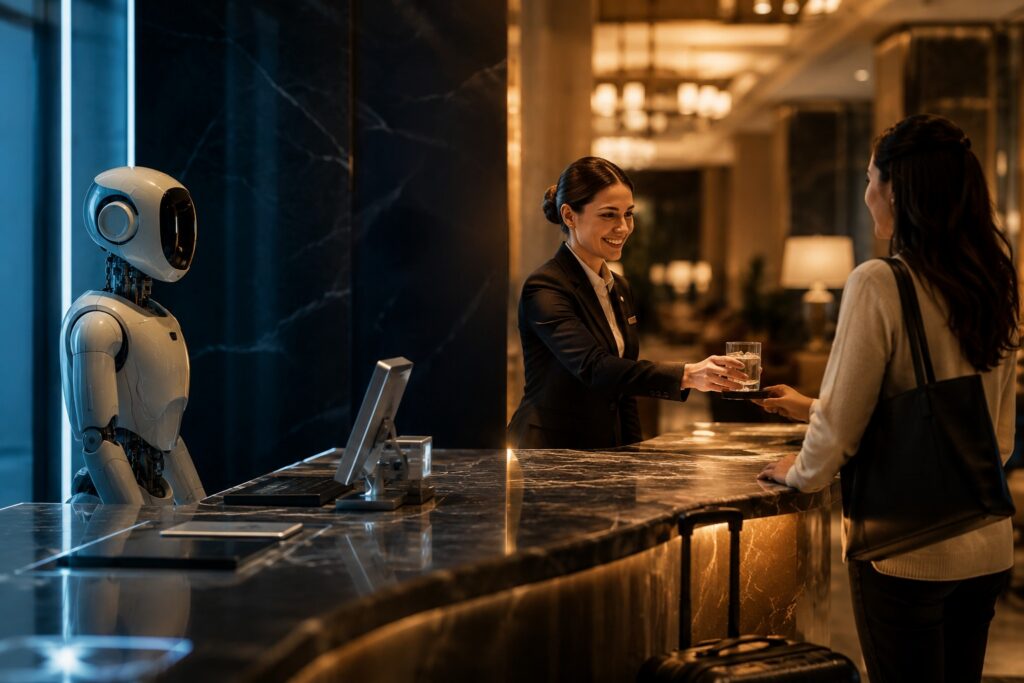
AI vs. “Would You Like to Have a Drink?”
Artificial intelligence and automation continue to reshape hospitality at an extraordinary pace. Yet one question remains:
As technology takes over more of the guest journey, are we at risk of losing the very human touch that has always defined great hospitality?
This is not simply a nostalgic question.
It is a commercial one.
If we become too focused on efficiency, we risk overlooking the moments that create guest satisfaction, build loyalty and ultimately drive long-term commercial performance.
This thought has stayed with me since a dinner with my friend and mentor, Lynn Grebstad.
Lynn began her career as a British Airways flight attendant before leading public relations for renowned hospitality brands including The Peninsula, later founding one of Hong Kong’s most successful hospitality PR agencies.
During dinner she shared a story that has remained with me ever since.
In her early days with British Airways, she would always begin by asking passengers:
“Would you like to have a drink?”
Such a simple question.
Yet it immediately put people at ease.
It made them feel welcomed, recognised and genuinely cared for.
It was never about the drink.
It was about the connection.
As she told me this story, I found myself wondering whether hospitality still consistently embraces that philosophy today.
Hospitality begins long before check-in
Today, hospitality begins long before a guest arrives at the hotel.
From the moment they discover your brand until long after they have checked out, every interaction shapes how they perceive your business.
The “Would you like to have a drink?” mindset is therefore much more than a pleasant greeting.
It is a philosophy that should influence every stage of the guest journey.
When applied consistently, it creates not only happier guests but stronger commercial performance for operators, owners and associates alike.
- Discovery and research
The guest experience begins long before booking.
Relevant content, personalised communication and genuine understanding of guest needs create an immediate sense that “this hotel understands me.”
Research from McKinsey shows that organisations leading in personalisation generate higher revenues while also improving marketing efficiency.
- Booking
Booking should feel like the beginning of a relationship rather than the completion of a transaction.
Guests who feel recognised from the outset are more likely to trust the brand, spend more during their stay and return in the future.
Personalisation at this stage benefits both the guest experience and commercial performance.
- During the stay
This is where hospitality becomes tangible.
Small gestures.
Thoughtful recognition.
Proactive service.
Personalised recommendations.
These moments transform an ordinary stay into a memorable experience.
Gallup has shown that emotionally connected guests spend significantly more during their stay, reinforcing that genuine human connection remains commercially valuable.
- After departure
Many hotels still underestimate the importance of what happens after guests leave.
Thoughtful follow-up communication strengthens relationships, increases loyalty and encourages advocacy.
Research by Bain & Company demonstrates that even small improvements in guest retention can have a dramatic impact on long-term profitability.
Building a guest-first culture
The philosophy behind one simple question — “Would you like to have a drink?” — should become part of an organisation’s culture.
Embed a genuine guest-first mindset
Guest-centric thinking cannot be delegated.
It must become part of the organisation’s DNA, empowering associates to consistently deliver memorable experiences.
Use technology to strengthen the human touch
Technology should never replace hospitality.
It should enable it.
Business intelligence, CRM systems and AI should help teams better understand guests so that interactions become even more relevant and personal.
Remember every stakeholder
Hospitality is not only about guests.
Associates who feel valued create better guest experiences.
Owners benefit from stronger financial performance.
Operators build more resilient businesses.
Everyone wins when hospitality becomes genuinely guest-centric.
Let technology remove friction
The best technology often goes unnoticed.
Whether through seamless booking, frictionless check-in or intelligent guest communication, technology should make hospitality feel easier—not less personal.
AI should enhance hospitality, not replace it
The real risk is not artificial intelligence.
The real risk is allowing efficiency to replace empathy.
AI is an extraordinary tool.
It can remove repetitive tasks.
It can surface insights.
It can personalise communication at scale.
But it cannot replace genuine human care.
The hotels that will thrive are not those that automate the most.
They will be those that use technology to give their people more time to do what only people can do.
Create trust.
Build relationships.
Deliver moments that guests remember.
Because when guests feel genuinely valued, they become more loyal, spend more and advocate for your brand.
That benefits guests, associates, operators and owners alike.
So perhaps the most important question hospitality should continue asking is still the simplest one:
“Would you like to have a drink?”
Not because of the drink itself.
But because it reminds us that great hospitality has never been about transactions.
It has always been about making people feel welcome.
And that remains one of the strongest commercial advantages any hotel can have.
Guest First. Commercial Always.